
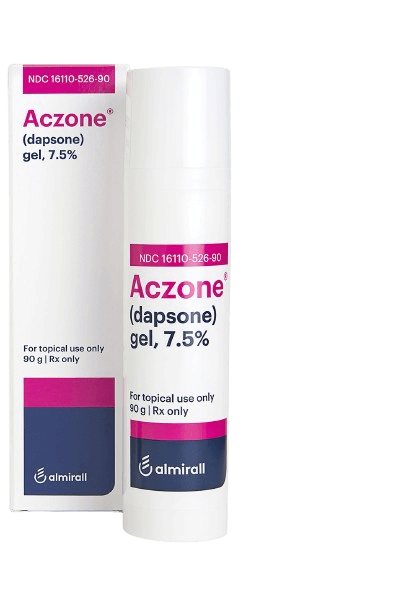
ACZONE® (dapsone) Gel, 7.5%
A ONCE-A-DAY Acne Treatment1
A ONCE-A-DAY Acne Treatment1
ACZONE® (dapsone) Gel, 7.5% is a prescription medicine used on the skin (topical) to treat acne in people 9 years and older.
Tell your doctor about all of your medical conditions, including if you have glucose-6-phosphate dehydrogenase deficiency (G6PD) or higher than normal levels of methemoglobin in your blood (methemoglobinemia).
Talk to your doctor about any medications you’re using, including topical benzoyl peroxide (BPO). Use of BPO with ACZONE® Gel may cause your skin and facial hair to temporarily turn yellow or orange at the site of application.
ACZONE® Gel 7.5% may cause serious side effects, including:
The most common side effects of ACZONE® Gel are dryness and itching of the skin being treated.
You are encouraged to report negative side effects of prescription drugs to the FDA. Visit www.fda.gov/medwatch or call 1‑800‑FDA‑1088.
Please click here for the full Prescribing Information.
1. ACZONE® Gel 7.5% [package insert]. Malvern, PA: Almirall, LLC.

© Almirall, LLC., Malvern, PA 19355 All rights reserved. All trademarks are the property of their respective owners. US-ACE-2400004 10/2024
This site is intended for US consumers only. No information on this site is provided with the intention to give medical advice or instructions on the accurate use of Almirall products. Almirall cannot answer unsolicited emails requesting medical advice; visitors should always consult a healthcare professional. Please visit the Almirall site for your country of residence for information concerning Almirall products and services available there.
ACZONE ®(dapsone) Gel 7.5% is indicated for the topical treatment of acne vulgaris in patients aged 9 years and older.
ACZONE® (dapsone) Gel, 7.5% is a prescription medicine used on the skin (topical) to treat acne in people 9 years and older.
Tell your doctor about all of your medical conditions, including if you have glucose-6-phosphate dehydrogenase deficiency (G6PD) or higher than normal levels of methemoglobin in your blood (methemoglobinemia).
Talk to your doctor about any medications you’re using, including topical benzoyl peroxide (BPO). Use of BPO with ACZONE® Gel may cause your skin and facial hair to temporarily turn yellow or orange at the site of application.
ACZONE® Gel 7.5% may cause serious side effects, including:
The most common side effects of ACZONE® Gel are dryness and itching of the skin being treated.
You are encouraged to report negative side effects of prescription drugs to the FDA. Visit www.fda.gov/medwatch or call 1‑800‑FDA‑1088.
Please click here for the full Prescribing Information.
1. ACZONE ® Gel 7.5% [package insert]. Malvern, PA: Almirall, LLC. 2019.